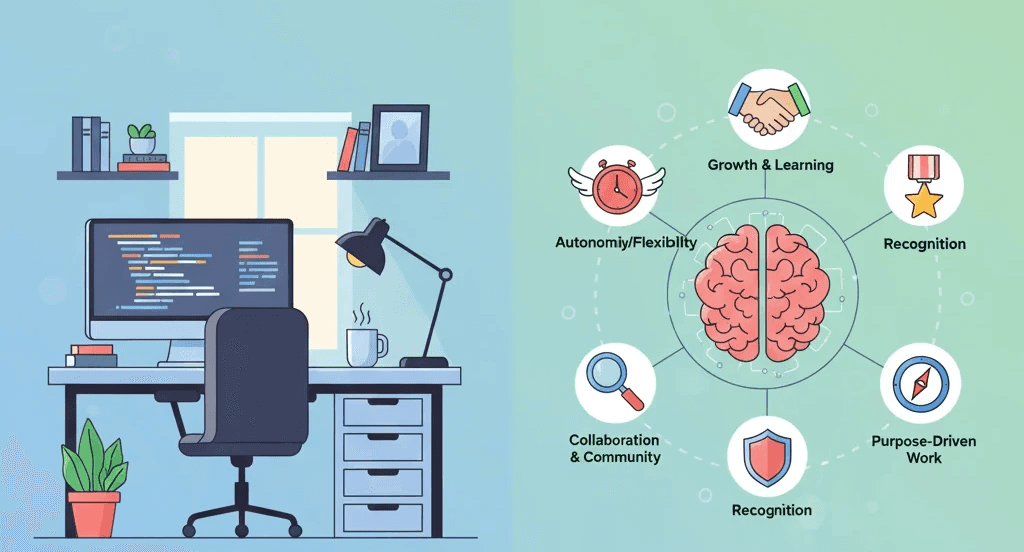
Remote work isn’t just a trend it’s a revolution reshaping how developers work, communicate, and grow. But what really drives top developers when they work remotely? Understanding the psychology behind their motivation can help companies hire smarter, retain better, and build high performing teams.
At DevsHire, we’ve studied patterns across hundreds of remote developers and identified key psychological drivers that separate average remote workers from top-performing developers. This guide dives deep into these motivators, offering actionable insights for businesses looking to thrive in the global remote talent landscape.
Key Takeaways
Top developers thrive in environments that balance autonomy with collaboration.
Psychological safety and recognition are as important as pay.
Purpose driven work directly increases motivation and productivity.
Understanding developer personality and preferences boosts retention.
Remote perks and flexibility are no longer optional they’re expected.
Autonomy'Freedom Fuels Productivity
One of the strongest motivators for top remote developers is autonomy the freedom to choose how, when, and where they work. Unlike traditional office environments, where supervision can sometimes feel stifling, remote setups thrive on trust and ownership. When developers are trusted to manage their own work, creativity flourishes and productivity soars.
Top-performing developers don’t need constant oversight; they need clarity, direction, and the space to deliver results in their own way. Companies that respect autonomy often see faster problem-solving, more innovative solutions, and greater job satisfaction.
How to promote autonomy effectively
Replace micromanagement with goal based accountability focus on outcomes, not activity.
Allow asynchronous communication, giving developers flexibility to work during their peak hours.
Encourage self-organization using tools like Notion, Jira, or Asana, empowering devs to manage timelines.
Most importantly, cultivate trust autonomy without trust is just pressure in disguise.
When autonomy is respected, developers feel a sense of control and mastery two psychological needs that drive intrinsic motivation.
Purpose Driven Work: Aligning Values and Goals
Developers are not just writing code; they’re building digital ecosystems that impact lives. What truly motivates them is knowing their work has purpose that their effort contributes to something meaningful. A developer who believes in the product’s mission will always outperform one who’s just coding for a paycheck.
For example, when a developer sees that the app they built is helping small businesses succeed or improving user accessibility, they feel emotionally connected to the outcome. That sense of purpose fuels long-term motivation and loyalty.
How to foster purpose-driven engagement:
Communicate the why behind every project not just the what
Share real user stories, client feedback, or social impact metrics that highlight results.
Involve developers in early-stage discussions so they understand how their work supports the company’s larger vision.
Celebrate milestones that show progress toward a meaningful goal.
Purpose gives work meaning and meaning gives work momentum.
Recognition & Feedback: Celebrate Wins, Big and Small
In remote environments, it’s easy for achievements to go unnoticed. Yet, recognition is a cornerstone of motivation. Developers want to know their hard work matters that someone noticed the long nights, the clever fix, or the extra mile they went to improve performance.
Recognition doesn’t always have to come from management. In fact, peer-to-peer appreciation is often more impactful because it feels authentic. Combined with constructive feedback, it builds confidence and a continuous growth mindset.
Effective recognition strategies include
Publicly celebrate wins during team calls or Slack announcements.
Use shout out channels where teammates can appreciate each other.
Pair every recognition moment with specific feedback explain why it mattered.
Regularly hold one on one sessions focused on growth and appreciation, not just task reviews.
Regularly hold one on one sessions focused on growth and appreciation, not just task reviews.
Psychological Safety: A Space to Innovate Without Fear
Every top developer has one secret ingredient behind their best work the freedom to fail safely.Psychological safety means developers feel comfortable taking risks, sharing new ideas, or admitting mistakes without fear of criticism or punishment
When a team knows they can experiment freely, innovation follows naturally. They brainstorm better, collaborate more openly, and take ownership of solving tough problems.
How to build psychological safety in remote teams
Replace blame with curiosity when something goes wrong, ask What can we learn? instead of Who did this?
Create channels for open discussion and anonymous feedback.
Encourage senior developers to mentor juniors, showing that questions and mistakes are part of learning.
Foster transparency from leadership when leaders admit their own mistakes, it sets the tone for trust.
Psychological safety turns fear into creativity and transforms average developers into innovators.
Growth & Learning: Continuous Development Matters
The best developers are lifelong learners. They’re driven by curiosity, mastery, and challenge not routine. Remote companies that nurture continuous learning gain more engaged, capable, and loyal employees.
Providing opportunities for skill enhancement isn’t just a perk; it’s a retention strategy. Developers who grow with your company are less likely to seek challenges elsewhere.
Ways to encourage learning and growth
Offer learning stipends for online courses, conferences, or certifications.
Create a learning hour policy where employees dedicate time weekly to upskilling.
Rotate developers through different projects or tech stacks to prevent stagnation.
Provide mentorship or access to industry thought leaders to guide their development.
A culture that celebrates learning sends a clear message: we invest in your future, not just your code.
Flexibility & Work Life Balance: Avoid Burnout
Remote work has blurred the boundaries between personal and professional life. Developers often work across time zones or jump between multiple projects and without balance, burnout becomes inevitable.The smartest remote-first companies don’t glorify overwork; they protect their team’s mental energy.
Flexibility is the new productivity multiplier. Developers who can design their schedules around their natural energy cycles produce more creative and consistent results.
Practical ways to encourage balance
Implement no meeting days to give uninterrupted focus time.
Set realistic deadlines that prioritize quality over quantity.
Encourage mental health days and provide access to well-being resources.
Respect digital boundaries no work pings after hours
Work life balance isn’t a soft benefit; it’s a strategic advantage that keeps top talent performing at their best.
Community & Collaboration: Connection Counts
Behind every successful remote developer is a team that makes them feel connected, supported, and valued. Humans are social by nature, and developers are no exception. While they may work independently, they still crave belonging the feeling that they’re part of a real team, not just a list of usernames in Slack.
Ways to strengthen connection and collaboration
Hold weekly team huddles for updates and open discussions
Organize virtual coffee breaks or game sessions to spark human interaction.
Use collaborative tools like Miro, Figma, or GitHub discussions to make teamwork feel seamless.
Create shared rituals monthly showcases, team awards, or culture spotlights that make people proud to belong.
When developers feel seen, heard, and included, they’re not just working remotely they’re working together.
Incentives Beyond Money: Tangible & Intangible Rewards
Money matters, but it’s rarely the main reason top developers stay. Beyond financial compensation, they seek growth, recognition, impact, and balance. Non-monetary incentives that touch emotional and professional needs can be far more powerful.
Meaningful incentives to consider
Career progression paths: Show clear steps for advancement within the company.
Equity or stock options: Give developers a stake in the company’s success.
Wellness and lifestyle benefits: Gym memberships, coworking passes, or wellness stipends.
Exclusive opportunities: Early access to tools, training, or tech conferences.
These perks communicate something far greater than money: you matter here. And that’s what motivates top developers to stay and perform at their best.
Incentives Beyond Money: Tangible & Intangible Rewards
Money matters, but it’s rarely the main reason top developers stay. Beyond financial compensation, they seek growth, recognition, impact, and balance. Non-monetary incentives that touch emotional and professional needs can be far more powerful.
Meaningful incentives to consider
Career progression paths: Show clear steps for advancement within the company.
Equity or stock options: Give developers a stake in the company’s success.
Wellness and lifestyle benefits: Gym memberships, coworking passes, or wellness stipends.
Exclusive opportunities: Early access to tools, training, or tech conferences.
These perks communicate something far greater than money: you matter here. And that’s what motivates top developers to stay and perform at their best.
Incentives Beyond Money: Tangible & Intangible Rewards
Money matters, but it’s rarely the main reason top developers stay. Beyond financial compensation, they seek growth, recognition, impact, and balance. Non-monetary incentives that touch emotional and professional needs can be far more powerful.
Meaningful incentives to consider
Career progression paths: Show clear steps for advancement within the company.
Equity or stock options: Give developers a stake in the company’s success.
Wellness and lifestyle benefits: Gym memberships, coworking passes, or wellness stipends.
Exclusive opportunities: Early access to tools, training, or tech conferences.
These perks communicate something far greater than money: you matter here. And that’s what motivates top developers to stay and perform at their best.
Conclusion
The psychology of remote work goes far deeper than laptops, Zoom calls, or time zones it’s about understanding human motivation at its core. Top developers aren’t driven solely by salaries or titles; they thrive where they feel trusted, valued, and connected to a meaningful purpose.
When a company nurtures autonomy, encourages growth, recognizes effort, and builds psychological safety, it unlocks something truly powerful intrinsic motivation. That’s where innovation happens. That’s where creativity flows freely.
At DevsHire, we’ve seen firsthand that when you align your hiring strategies with human psychology, you don’t just build remote teams you build communities of thinkers, creators, and problem-solvers who care deeply about what they do.
So as you grow your remote workforce, remember this: motivation isn’t a perk you provide it’s a culture you create. The companies that master this psychology will lead the future of remote development not by managing people, but by empowering them to bring their best selves to work every day.
Conclusion
The psychology of remote work goes far deeper than laptops, Zoom calls, or time zones it’s about understanding human motivation at its core. Top developers aren’t driven solely by salaries or titles; they thrive where they feel trusted, valued, and connected to a meaningful purpose.
When a company nurtures autonomy, encourages growth, recognizes effort, and builds psychological safety, it unlocks something truly powerful intrinsic motivation. That’s where innovation happens. That’s where creativity flows freely.
At DevsHire, we’ve seen firsthand that when you align your hiring strategies with human psychology, you don’t just build remote teams you build communities of thinkers, creators, and problem-solvers who care deeply about what they do.
So as you grow your remote workforce, remember this: motivation isn’t a perk you provide it’s a culture you create. The companies that master this psychology will lead the future of remote development not by managing people, but by empowering them to bring their best selves to work every day.
Conclusion
The psychology of remote work goes far deeper than laptops, Zoom calls, or time zones it’s about understanding human motivation at its core. Top developers aren’t driven solely by salaries or titles; they thrive where they feel trusted, valued, and connected to a meaningful purpose.
When a company nurtures autonomy, encourages growth, recognizes effort, and builds psychological safety, it unlocks something truly powerful intrinsic motivation. That’s where innovation happens. That’s where creativity flows freely.
At DevsHire, we’ve seen firsthand that when you align your hiring strategies with human psychology, you don’t just build remote teams you build communities of thinkers, creators, and problem-solvers who care deeply about what they do.
So as you grow your remote workforce, remember this: motivation isn’t a perk you provide it’s a culture you create. The companies that master this psychology will lead the future of remote development not by managing people, but by empowering them to bring their best selves to work every day.
FAQ
What truly motivates remote developers to perform at their best?
Top remote developers are motivated by autonomy, purpose, growth, and recognition. When they’re trusted to manage their own work, connected to meaningful goals, and given space to innovate, they perform with passion. Unlike traditional office settings, remote developers value freedom, flexibility, and impact more than rigid structures. When those needs are met, productivity naturally follows.
How can companies build a strong remote culture that keeps developers engaged?
A strong remote culture is built on trust, transparency, and consistent communication. Companies should focus on creating a digital workspace that encourages connection and collaboration, not isolation. Regular team check-ins, clear communication tools (like Slack or Notion), and small rituals like celebrating wins help developers feel part of something bigger. Remember, culture isn’t about physical presence it’s about shared purpose and belonging.
Is salary the most important factor for remote developer motivation?
Not always. While fair compensation is essential, top developers are often more driven by meaningful work, growth opportunities, and flexibility. They want to see the value of their contribution and feel recognized for it. In fact, studies show that when developers feel trusted and appreciated, financial incentives become secondary to emotional and professional fulfillment.
How can businesses prevent burnout in remote developer teams?
Preventing burnout requires balance, empathy, and structure. Encourage developers to set clear work boundaries, avoid back-to-back virtual meetings, and take breaks without guilt. Leaders should promote asynchronous work so developers can focus deeply without constant interruptions. Providing mental health support, flexible hours, and regular one-on-one check-ins can dramatically reduce burnout and keep performance sustainable.
What role does learning and development play in remote motivation?
A huge one. The best developers are lifelong learners they thrive on new challenges and evolving technologies. Offering training budgets, mentorship programs, and opportunities to explore new tools shows that your company invests in their growth. When developers see a clear path to progress, their motivation, creativity, and loyalty increase significantly.
How can DevsHire help companies hire and motivate remote developers effectively?
At DevsHire, we go beyond matching skills we match mindsets. Our process identifies developers who not only have technical excellence but also align with your company’s culture and values. We help companies build psychologically safe, growth-oriented remote teams that thrive on collaboration and motivation. With DevsHire, you’re not just hiring remote developers you’re building a team that believes in your mission and works with genuine passion.
FAQ
What truly motivates remote developers to perform at their best?
Top remote developers are motivated by autonomy, purpose, growth, and recognition. When they’re trusted to manage their own work, connected to meaningful goals, and given space to innovate, they perform with passion. Unlike traditional office settings, remote developers value freedom, flexibility, and impact more than rigid structures. When those needs are met, productivity naturally follows.
How can companies build a strong remote culture that keeps developers engaged?
A strong remote culture is built on trust, transparency, and consistent communication. Companies should focus on creating a digital workspace that encourages connection and collaboration, not isolation. Regular team check-ins, clear communication tools (like Slack or Notion), and small rituals like celebrating wins help developers feel part of something bigger. Remember, culture isn’t about physical presence it’s about shared purpose and belonging.
Is salary the most important factor for remote developer motivation?
Not always. While fair compensation is essential, top developers are often more driven by meaningful work, growth opportunities, and flexibility. They want to see the value of their contribution and feel recognized for it. In fact, studies show that when developers feel trusted and appreciated, financial incentives become secondary to emotional and professional fulfillment.
How can businesses prevent burnout in remote developer teams?
Preventing burnout requires balance, empathy, and structure. Encourage developers to set clear work boundaries, avoid back-to-back virtual meetings, and take breaks without guilt. Leaders should promote asynchronous work so developers can focus deeply without constant interruptions. Providing mental health support, flexible hours, and regular one-on-one check-ins can dramatically reduce burnout and keep performance sustainable.
What role does learning and development play in remote motivation?
A huge one. The best developers are lifelong learners they thrive on new challenges and evolving technologies. Offering training budgets, mentorship programs, and opportunities to explore new tools shows that your company invests in their growth. When developers see a clear path to progress, their motivation, creativity, and loyalty increase significantly.
How can DevsHire help companies hire and motivate remote developers effectively?
At DevsHire, we go beyond matching skills we match mindsets. Our process identifies developers who not only have technical excellence but also align with your company’s culture and values. We help companies build psychologically safe, growth-oriented remote teams that thrive on collaboration and motivation. With DevsHire, you’re not just hiring remote developers you’re building a team that believes in your mission and works with genuine passion.
FAQ
What truly motivates remote developers to perform at their best?
Top remote developers are motivated by autonomy, purpose, growth, and recognition. When they’re trusted to manage their own work, connected to meaningful goals, and given space to innovate, they perform with passion. Unlike traditional office settings, remote developers value freedom, flexibility, and impact more than rigid structures. When those needs are met, productivity naturally follows.
How can companies build a strong remote culture that keeps developers engaged?
A strong remote culture is built on trust, transparency, and consistent communication. Companies should focus on creating a digital workspace that encourages connection and collaboration, not isolation. Regular team check-ins, clear communication tools (like Slack or Notion), and small rituals like celebrating wins help developers feel part of something bigger. Remember, culture isn’t about physical presence it’s about shared purpose and belonging.
Is salary the most important factor for remote developer motivation?
Not always. While fair compensation is essential, top developers are often more driven by meaningful work, growth opportunities, and flexibility. They want to see the value of their contribution and feel recognized for it. In fact, studies show that when developers feel trusted and appreciated, financial incentives become secondary to emotional and professional fulfillment.
How can businesses prevent burnout in remote developer teams?
Preventing burnout requires balance, empathy, and structure. Encourage developers to set clear work boundaries, avoid back-to-back virtual meetings, and take breaks without guilt. Leaders should promote asynchronous work so developers can focus deeply without constant interruptions. Providing mental health support, flexible hours, and regular one-on-one check-ins can dramatically reduce burnout and keep performance sustainable.
What role does learning and development play in remote motivation?
A huge one. The best developers are lifelong learners they thrive on new challenges and evolving technologies. Offering training budgets, mentorship programs, and opportunities to explore new tools shows that your company invests in their growth. When developers see a clear path to progress, their motivation, creativity, and loyalty increase significantly.
How can DevsHire help companies hire and motivate remote developers effectively?
At DevsHire, we go beyond matching skills we match mindsets. Our process identifies developers who not only have technical excellence but also align with your company’s culture and values. We help companies build psychologically safe, growth-oriented remote teams that thrive on collaboration and motivation. With DevsHire, you’re not just hiring remote developers you’re building a team that believes in your mission and works with genuine passion.