
Introduction
Managing remote developers can be challenging, especially when you want to ensure productivity without micromanaging. Key Performance Indicators (KPIs) are essential tools that help track performance, measure results, and maintain team efficiency. But not all metrics are valuable some give misleading insights, while others drive real impact.
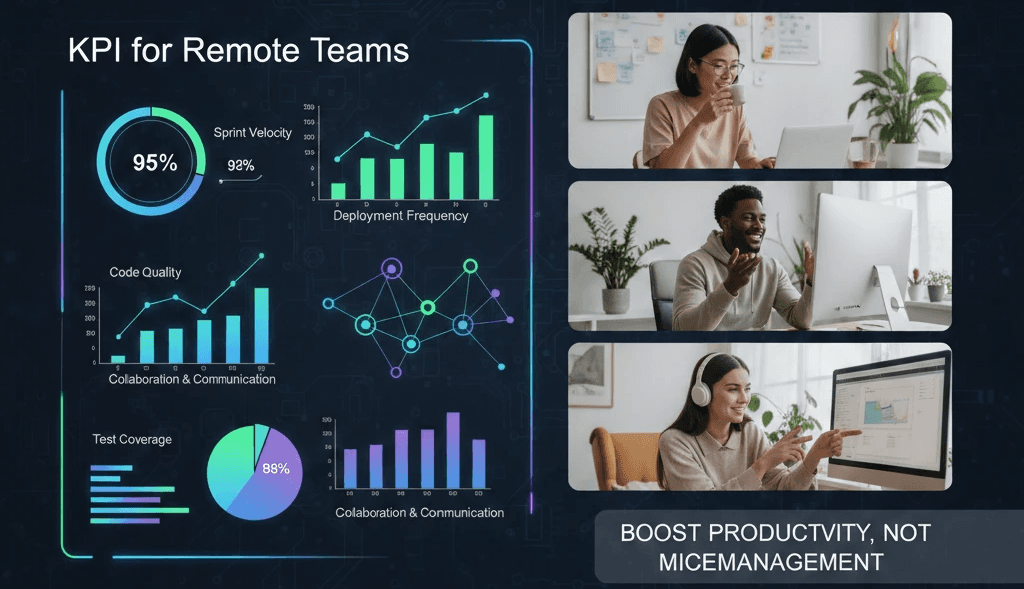
In this guide, we’ll cover the most meaningful KPIs for remote developers, explain how to track them effectively, and show how these insights can boost productivity, team morale, and business outcomes.
A well defined KPI system helps remote teams stay aligned, meet deadlines, and deliver high quality work. It’s not about tracking every click it’s about measuring results that truly matter for your business
Key Takeaways
Focus on KPIs that reflect real outcomes, not just activity.
Measuring productivity remotely requires a mix of quantitative and qualitative metrics.
Tracking KPIs improves accountability, efficiency, and team engagement.
Tools like Jira, GitHub, and DevsHire analytics make KPI tracking effortless.
Clear KPIs help align developer efforts with business goals and project success.
Code Quality Metrics
Quality is more important than just output. Tracking code quality means looking at the number of bugs, errors, and adherence to coding standards. High quality code reduces rework, prevents production issues, and ensures long-term stability. Tools like SonarQube or Code Climate can automatically measure code complexity, duplication, and maintainability. By monitoring code quality, teams can spot potential issues early and maintain a high standard of work across the project. It also reflects a developer’s attention to detail and professionalism.
Velocity and Sprint Completion
Velocity measures how much work a developer completes within a sprint, typically in story points or tasks. This KPI helps managers understand output consistency and forecast project timelines accurately. Tracking sprint completion reveals bottlenecks, helping teams adjust workload and priorities effectively. It’s important to note that velocity isn’t about rushing it’s about achieving realistic goals efficiently. High and consistent velocity often indicates a well-managed workflow and strong focus on delivering value.
Pull Request & Code Review Efficiency
Monitoring pull requests and code review times provides insight into collaboration and workflow efficiency. Quick submission and timely reviews keep the development process smooth, reducing delays in deployment. Delayed reviews can create bottlenecks and slow down team progress. Efficient PR handling ensures better code quality, faster releases, and stronger teamwork. It also encourages knowledge sharing, as developers provide feedback on each other’s code.
Deployment Frequency
How often a developer’s work reaches production reflects the efficiency of the development process. Frequent and stable deployments indicate a healthy CI/CD workflow and higher productivity. Teams that deploy regularly can release features faster, fix bugs quickly, and respond to user feedback efficiently. This KPI is also a sign of confidence in code quality and testing processes. Tracking deployment frequency helps managers measure how effectively a developer contributes to business outcomes and user satisfaction.
Issue Resolution Time
This KPI measures how quickly developers resolve bugs, tickets, or reported issues. Fast resolution minimizes downtime, improves user experience, and maintains product stability. Monitoring issue resolution helps identify strengths and areas where developers may need support or resources. It also fosters accountability, as team members understand their role in keeping projects on track. Teams with faster resolution times tend to have higher client satisfaction and smoother product launches.
Test Coverage and Automation
Test coverage is the percentage of code that is covered by automated tests. Higher coverage ensures fewer bugs, smoother releases, and higher confidence in code reliability. Automation reduces repetitive tasks, freeing developers to focus on complex problems and feature development. Tracking this KPI encourages developers to write maintainable and robust code. Tools like JUnit, Selenium, or Cypress can provide detailed reports on test effectiveness. Test coverage also directly impacts the speed and quality of software delivery.
Collaboration & Communication
In a remote setup, collaboration is as important as individual productivity. Metrics like responsiveness on communication platforms, contributions to documentation, and participation in stand-ups reveal team engagement. Strong collaboration prevents miscommunication, reduces delays, and ensures knowledge is shared across the team. It also builds a sense of accountability and trust. Developers who actively communicate and collaborate create a cohesive workflow, even across time zones.